



What are 3 common pitfalls when SAP CCM is implemented in S/4?
The introduction of Settlement Management in SAP S/4 HANA is unfortunately often viewed by many SAP customers at the outset as a purely technical “migration topic.” From our consulting perspective, however, experience shows that the real challenges usually lie less in configuring the solution itself and much more in a lack of understanding of SAP CCM’s capabilities, the correct tax treatment of settlement processes, and proper preparation through clean and consistent master and transactional data. It is precisely in these areas that typical project pitfalls repeatedly arise—issues that often only become apparent very late, frequently long after go-live.
With this blog post, we therefore aim to highlight typical pitfalls in the implementation of SAP CCM that we have encountered across numerous projects. The goal is to raise awareness of where the major risks lie, which common misconceptions are frequently made, and how these issues can be avoided with the right approach.
Based on our experience, the following three mistakes are made particularly often:
- Missing or insufficient tax concept
- Poor quality of master and transactional data
- Unnecessary custom developments
In detail:
1. Missing or insufficient tax concept
A relatively critical pitfall when implementing SAP CCM (Settlement Management) in SAP S/4 HANA is the absence of a well-defined or carefully designed tax concept. In many organizations, too little attention is paid to tax determination logic, or it is only questioned once the first settlement processes are already live—at a point when corrections can only be made with considerable effort.
In practice, this issue often becomes apparent in hastily set up settlement scenarios, such as advertising allowances. In many cases, a bonus contract with output tax is quickly created without further consideration. Only later does it become clear that, based on the contractual agreement and the nature of the service, this specific business transaction is not a bonus from a tax perspective, but must instead be treated as a commission. The result: input tax should have been posted instead of output tax. Such misclassifications not only lead to significant accounting correction efforts, but also pose considerable risks during tax audits and financial inspections at a later stage.
Another common mistake occurs when bonus settlements that represent a “rebate” to the customer trigger a new tax determination by the system—even though, from a tax perspective, this should not happen. This issue typically arises when an existing standard condition contract type is simply copied as a template, without a clear understanding of how different contract types behave with regard to tax determination. For example, there are goods-related contract types that automatically adopt the original tax codes from the source invoices. If this logic is not properly understood or deliberately taken into account, it can quickly lead to inconsistent and incorrect tax postings.
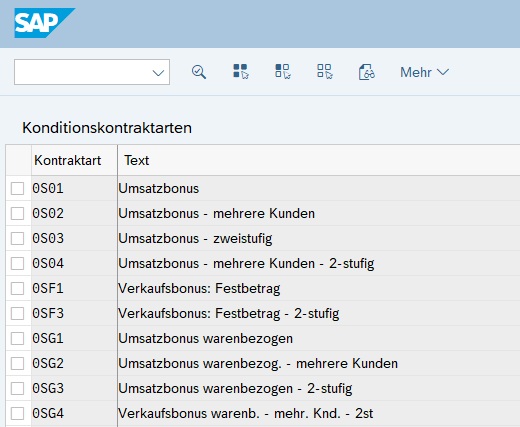

We therefore always recommend involving colleagues from the tax department or a tax advisor at an early stage, as consistent tax determination is a key prerequisite for audit-compliant processing in SAP CCM.
2. Poor quality of master and transactional data
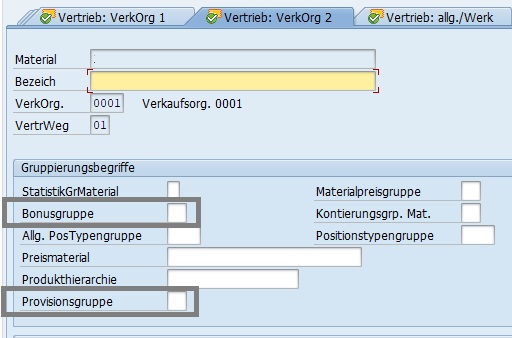
Another common mistake when transitioning to SAP CCM is insufficient quality of the master and transactional data on which settlement processes are based. This particularly affects material master data and, as a result, transactional data such as SD invoices, deliveries, or purchase orders. In many cases, important parameters are not taken into account when material master records are created, or they are not maintained consistently—such as being defined as mandatory fields—even though they are later required for the delimitation and selection of relevant revenues. These include, for example, bonus and commission groups or company-specific product groupings (e.g. assortments), which can be used in revenue selection criteria. If this information is missing or maintained inconsistently, certain portions of revenue cannot be excluded or correctly considered and differentiated during settlement runs.
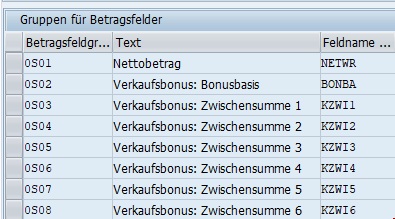
Equally important in this context is the design of pricing determination. When setting up pricing procedures in SD/MM, the primary focus is often placed on invoice-relevant price calculation, without considering downstream settlement processes from the outset. Especially when different settlement bases are required for different business areas, the pricing procedure must be designed from the very beginning to ensure that all settlement-relevant values are deliberately carried forward into predefined subtotals (KZWI1–6) in the billing tables. If this is not done, the resulting transactional data can no longer be adjusted afterward, leading to significant manual recalculation efforts and limited automation.
Unnecessary custom developments
Last but not least, we would like to address the many unnecessary custom developments we have encountered. These often arise simply from the assumption that the SAP standard is insufficient for more complex settlement logic, or from habit—aiming to replicate legacy processes “the way they used to be.” In reality, the SAP CCM solution in SAP S/4 HANA already provides powerful standard alternatives that render many traditional customer-specific developments obsolete.
A key tool in this context is, of course, CDS views (Core Data Services), which allow the data model for all incentive and settlement processes to be elegantly enhanced with relevant fields—without having to develop customer-specific user exits or BAdIs. This approach not only reduces development and maintenance effort, but also ensures improved upgrade and release stability.
The same benefits are delivered by the often underestimated Transfer Manager, a standardized configuration tool within Settlement Management. Using so-called transfer events and transfer rules, data can be read very flexibly—per settlement document type—from a wide variety of tables and structures, transformed as needed, and passed on to downstream modules (especially FI/CO), all without requiring any ABAP coding. Particularly in light of the regular SAP S/4 HANA releases and innovations, we therefore strongly recommend that our customers consistently leverage this component as part of a clean core approach in SAP CCM. Not as a technical detail, but as a strategic decision that delivers sustainable long-term value.
Conclusion:
From our perspective, implementing SAP CCM in SAP S/4 HANA requires a minimum level of experience with this new solution, thorough preparation, and strategic foresight. Without a robust tax concept, consistent master and transactional data, and a solid understanding of standard functionalities, risks arise that often only become apparent after go-live. At the same time, the SAP CCM standard provides powerful tools that help avoid many customer-specific developments. Organizations that deliberately leverage these capabilities and set the right course early on can establish a future-proof and audit-compliant settlement environment.