



What is SAP CCM and what are the five key benefits of this solution?
SAP CCM steht für Condition Contract Management und liefert im neuen S/4-HANA-Standard die Grundlage für alle Arten von nachträglichen Abrechnungen, wie z.B. die Kundenbonusabwicklung, Provisionsvereinbarungen, Lizenzgebührenberechnung, Frachtkostenabrechnung u.v.m. Im Deutschen wird für SAP CCM oft auch als Synoym der Begriff „Abrechnungsmanagement“ verwendet, was in Englisch wiederum mit „Settlement Management“ übersetzt wird. Allerdings ist das Condition Contract Management genau genommen nur ein Teil des Abrechnungsmanagements, welches aus der alten ECC-Komponente LO-AB (Agenturgeschäft) entstanden ist.
Da mit der S/4-HANA-Einführung die Nutzung des Abrechnungsmanagements für alle SAP-Kunden obligatorisch geworden ist, die in der alten ECC-Welt noch die klassischen SD-Bonus-Vereinbarungen verwendet haben, sind in den letzten fünf bis acht Jahren vor allem in diesem Kundenbonus-Umfeld schnell die ersten S/4-HANA-Projekte für SAP CCM auf den Weg gebracht worden.

But beyond that, this innovative SAP CCM solution can also be ideally used for a wide range of other additional settlement and reimbursement scenarios that may not be immediately obvious. These are processes such as supplier rebates, factoring, ship-and-debit scenarios as well as for the cross-company allocation of overhead costs.
From our perspective SAP CCM offers the following five key benefits:
- One central application for all settlement processes within S/4 HANA
- Clear and transparent determination of the calculation base (revenue base)
- Agreements can be easily scaled and also created retroactively
- Fast analyses and simulations are possible at any time based based on live data
- Consistent and seamless calculation of accruals
1. One central application for all settlement processes in S/4 HANA
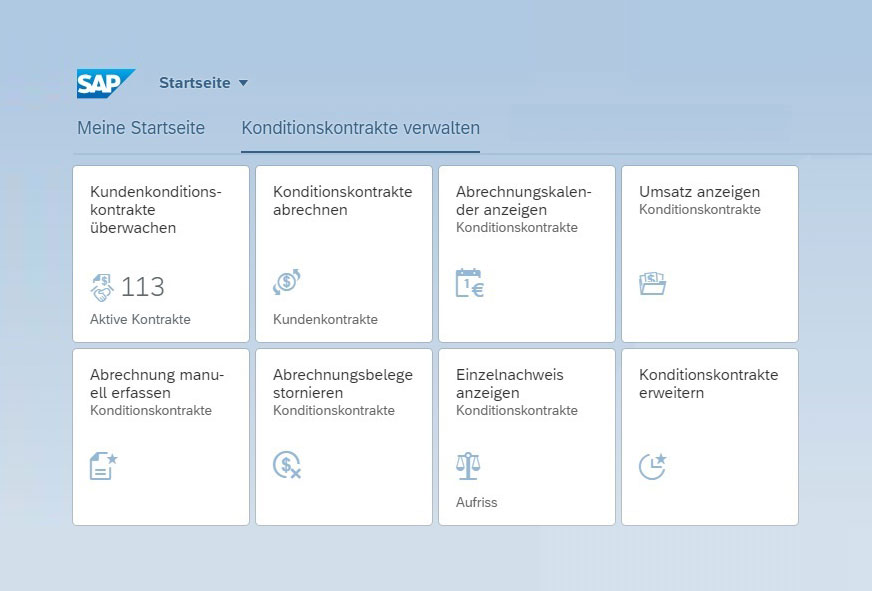
All relevant agreements with customers, suppliers or intercompany business partners can be centrally managed in S/4 HANA using the condition contracts. Here, SAP has put a strong focus on usability for the end users.
Because of the consistent and intuitive user interface, the users benefit from a fast and transparent overview of their contracts. Also the easy executing of operational tasks - such as the triggering of settlement runs or accrual calculations is outstanding and delivers an immediate added value in the day-to-day work.
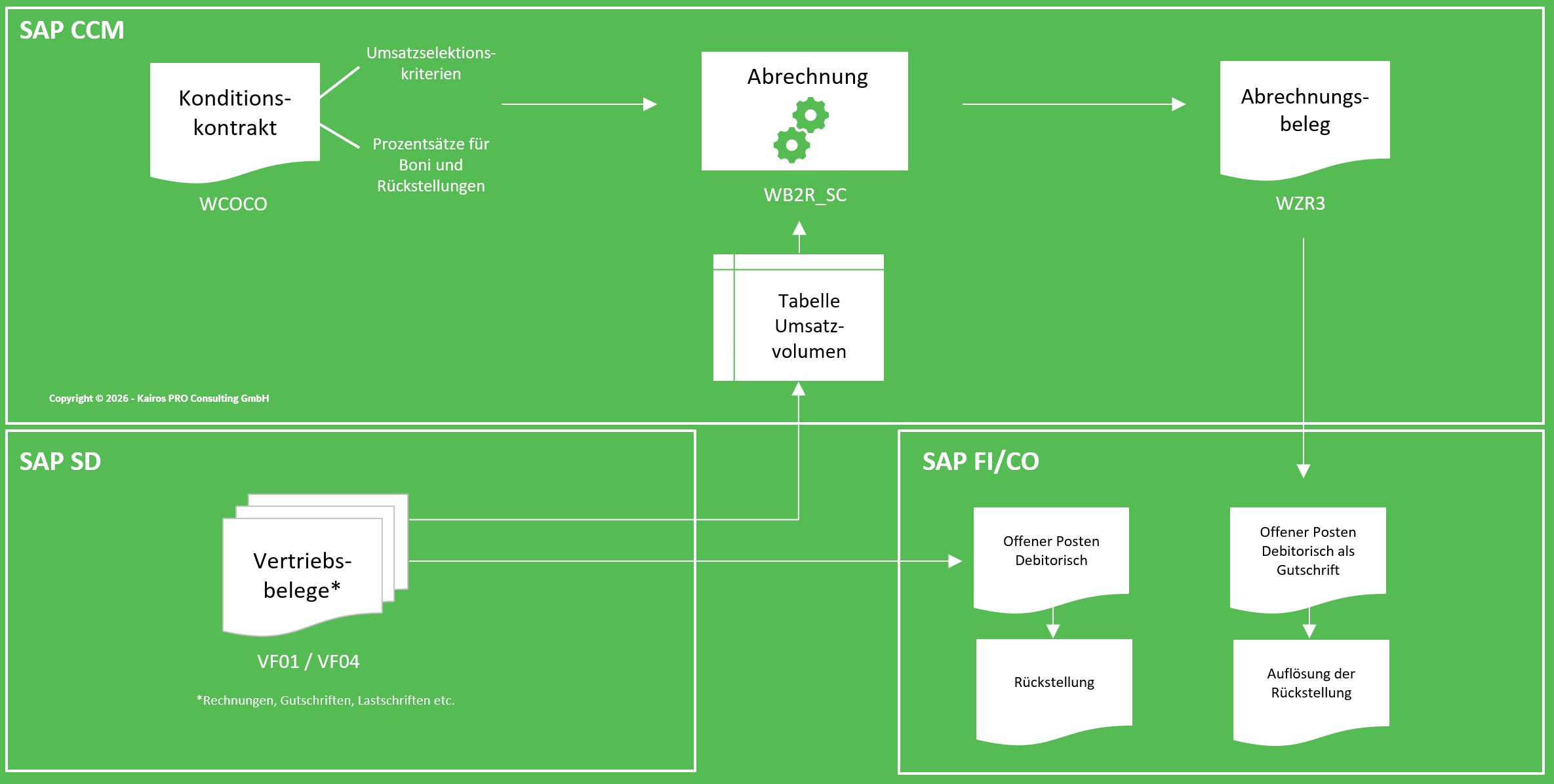
In addition to that, CCM offers a smart and elaborate architecture that enables seamless integration between the new settlement components on the one hand - like the condition contracts and settlement programs - and other classical SAP core modules on the other hand, in particular SD, MM and FI/CO.
As a result, SAP has succeeded with CCM in combining completely new functionalities and tools such as the flexible definition of the business volume or optional delta accrual runs with well-established components like classic pricing condition techniques and account determination.
2. Clear and transparent determination of the calculation base (revenue base)
The most significant innovation of SAP CCM compared to the former ECC rebate processing is the use of the so-called "business volume". This revenue base can be defined very intuitively and flexibly within each condition contract using revenue selection criteria. In customizing, the available revenue selection criteria can be configured individually for all the different contract types. As a data foundation for the revenue base, standard tables, CDS views, as well as customer-specific Z tables can be used.
The handling of the business volume logic is particularly user-friendly and elegantly designed because each individual revenue selection criterion can be defined using either an inclusive or exclusive logic. This allows even complex subsets of a relevant settlement volume to be identified quickly and with a high degree of precision.
3. Agreements can be easily scaled and also created retroactively
You can easily model settlement agreements that should be valid equally to multiple customers or suppliers using a single multi-condition contract. This saves a significant amount of time and resources. During settlement runs, so-called split criteria ensure that each customer or supplier receives a separate settlement document with their individual revenue base. With the use of the right customizings, it is easy then to define a common scale basis within such multi-condition contracts, so that always the right scales are determined accross multiple business partners.
Furthermore, thanks to the simplified data model in SAP S/4 HANA, it is no longer an issue to create condition contracts retroactively—that is, with validity dates in the past. In the former ECC system, this was always problematic, as the index table (VBOX) first had to be laboriously updated using transaction VBOF in order to ensure that the invoices relevant to a new agreement were taken into account. In SAP S/4 HANA, however, the relevant revenue data is now read directly and dynamically from the underlying data sources, allowing retroactive agreements to be considered automatically and reliably in settlement processing.
4. Fast analyses and simulations are possible at any time based on live data
With the improved SAP S/4 HANA architecture in SAP CCM, fast and straightforward analyses
of the current settlement-relevant revenue volume can be performed at any time based on live data from transactional documents (e.g. VBRK, VBRP, etc.)—per contract using transaction WB2R_BUSVOL. This dynamic and transparent real-time revenue analysis also makes it possible to effectively verify whether the selected revenue selection criteria in the contracts are correctly and completely configured. As a result, end users can perform the necessary plausibility checks for their contracts ahead of upcoming settlement runs, allowing master data issues to be identified and addressed at an early stage.
Fast simulation runs for upcoming settlements are also possible based on live data.
5. Consistent and seamless calculation of accrued liabilities
In the new SAP CCM solution within SAP S/4 HANA, there are several methods for accrual calculation, which differ depending on timing, degree of automation, and intended use.
- As in the former ECC solution, the required accruals for the relevant bonus contracts can already be calculated on a daily basis during SD billing. These accruals are then automatically reversed as part of the contract settlement process.
- Alternatively, automated periodic delta accrual runs (e.g. monthly or quarterly) can be scheduled as batch jobs based on the settlement calendar. In this process, the accrual program always determines the current accrual requirement up to the end of the respective settlement period, taking into account previously posted payouts and accruals. Any calculated shortfall or surplus in accruals is automatically balanced.
- In addition, users can manually trigger accrual postings at any time—for example, if accruals need to be created only in exceptional cases or retroactively. Likewise, suitable tools are available for the unscheduled reversal of accruals (e.g. for obsolete contracts), such as transaction WB2R_RAC.
Conclusion:
SAP CCM is the modern SAP S/4 HANA standard for all settlement and incentive processes and provides companies with a central, fully integrated solution for complex contract and settlement models. The solution stands out through a clear definition of the revenue base, high scalability of agreements, real-time analyses based on live data, as well as reliable and flexible accrual management. Overall, SAP CCM enables more efficient incentive processes, greater transparency, and significantly less manual effort compared to the former ECC environment.